
A property management team contacted Helfrich Associates about a commercial building complex with tenants complaining about shifts in their floors and shattered windows. As licensed professional structural engineers with decades of experience, we have helped many building owners and property managers resolve similar issues to safeguard their property and satisfy tenants.
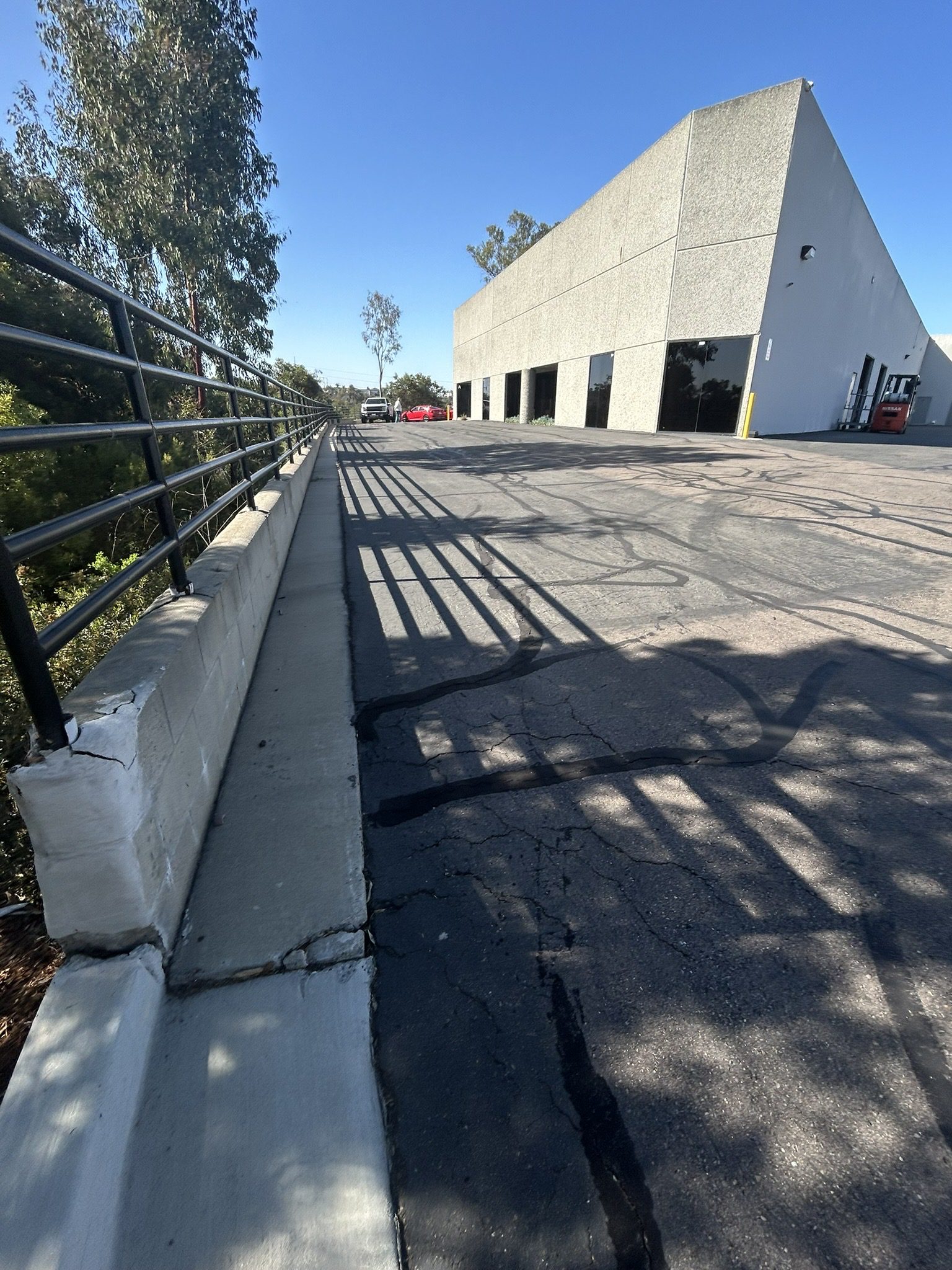
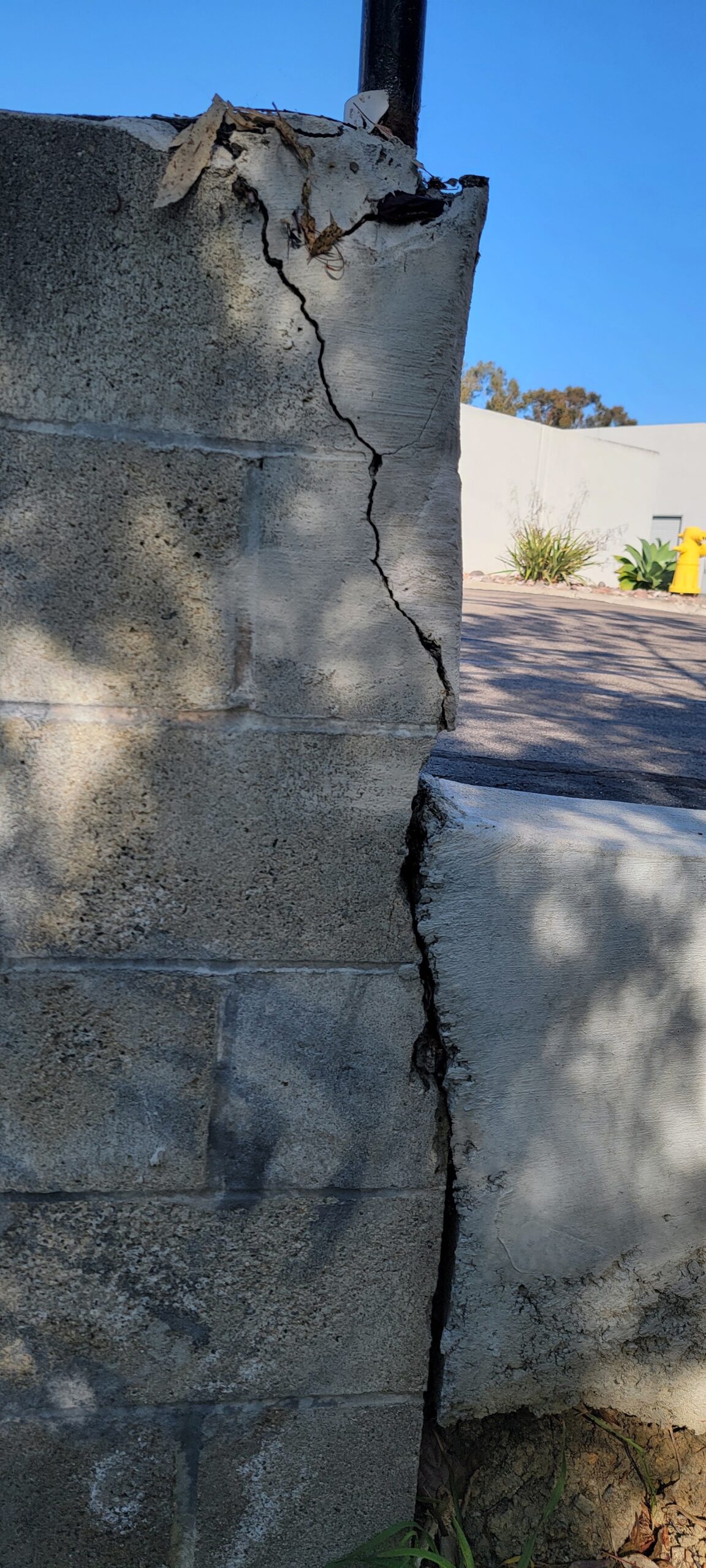
After visiting the location, we found that this tilt-up building is constructed on a site with two distinct subsurface conditions: approximately half of the structure rests on fill soil, while the other half is founded on cut soil. This contrast in soils composition has contributed to noticeable structural distress to the retaining walls, structures and parking areas throughout the property, affecting safety and property value.
The Problems
When a building is placed on “cut soil” that means it rests largely on native, undisturbed soil, which has been graded and which provides the greatest foundation structural integrity. If “fill dirt” must be added or mixed into the native soil this can reduce the ground’s foundation load bearing capacity, and there is then a potential risk of settling that can cause building structural integrity problems later on.
The property management team informed us that several windows had already broken, prompting their concerns about building movement. Inside the structure, the tenants also reported feeling shifts in the floor while walking through affected units. Our assessment confirmed slab cracking and widespread exterior and interior distress consistent with differential settlement, including separation of the foundation from the ground.
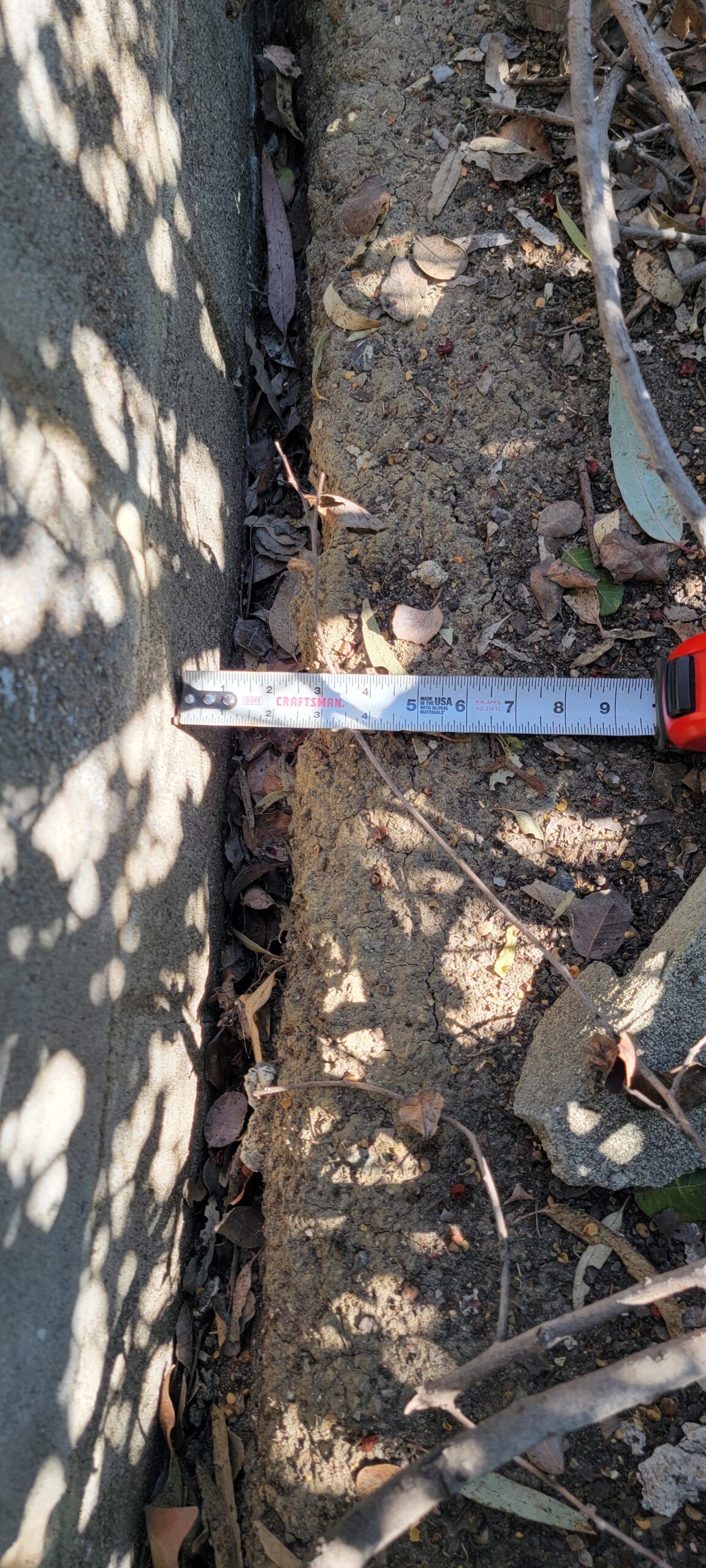
Exterior improvements to the property also showed significant earth movement. The parking area contained widespread cracking and patch repairs, with approximately 1 inch of separation between the asphalt and the building, as well as clear retaining wall movement. Additionally, there was a 2.5-inch gap between the retaining wall and the slope-side soil, indicating lateral displacement and loss of soil contact.
The Solution Process
• Initial Site Visit: We documented visible cracking, settlement, and displacement throughout the interior, parking area, and retaining wall.
• Document Research: Historical grading and construction records showed that the property was built partially on fill and partially on cut soils, aligning with the pattern of structural distress.
• Floor Level Survey: Because the most significant movement occurred in areas constructed over fill soils, we performed a detailed floor level survey across those units. This survey quantified the differential movement and confirmed more than 3 inches of settlement in several locations.
• Geotechnical Soil Investigations: Borings were completed near the building on the fill side and near the retaining wall. These borings provided key information about soil density, composition, depth of fill, and overall subsurface performance.
The Conclusion
Our investigation determined that the distress throughout the property was primarily linked to the sections of the building found on fill soil. The combination of shattered windows, slab cracking, pavement separation, and retaining wall displacement aligns with the settlement confirmed through elevation surveying and subsurface exploration. Based on these findings, we developed a comprehensive repair plan to stabilize the building, address wall movement, and prevent further soil-related issues. The building owner then worked with a construction company to make the necessary repairs and resolve the tenant complaints.