
The power of water is never to be underestimated when it comes to the structural integrity of buildings as well as the safety of those who work or live in them. Think of the powerful glacial waters carving the Yosemite Valley’s scenic beauty over millennia by glaciers, then floods and now rivers, streams and creeks.
When we see excess water flowing over our yards, sidewalks, driveways or running down the street or standing water that never quite dries up, we can be lulled into a false sense of security that we can wait a while to make repairs. We think its’s only a little water and that asphalt, concrete, and steel are rugged material, but in truth they are no match for water’s relentless power and potential corrosion.
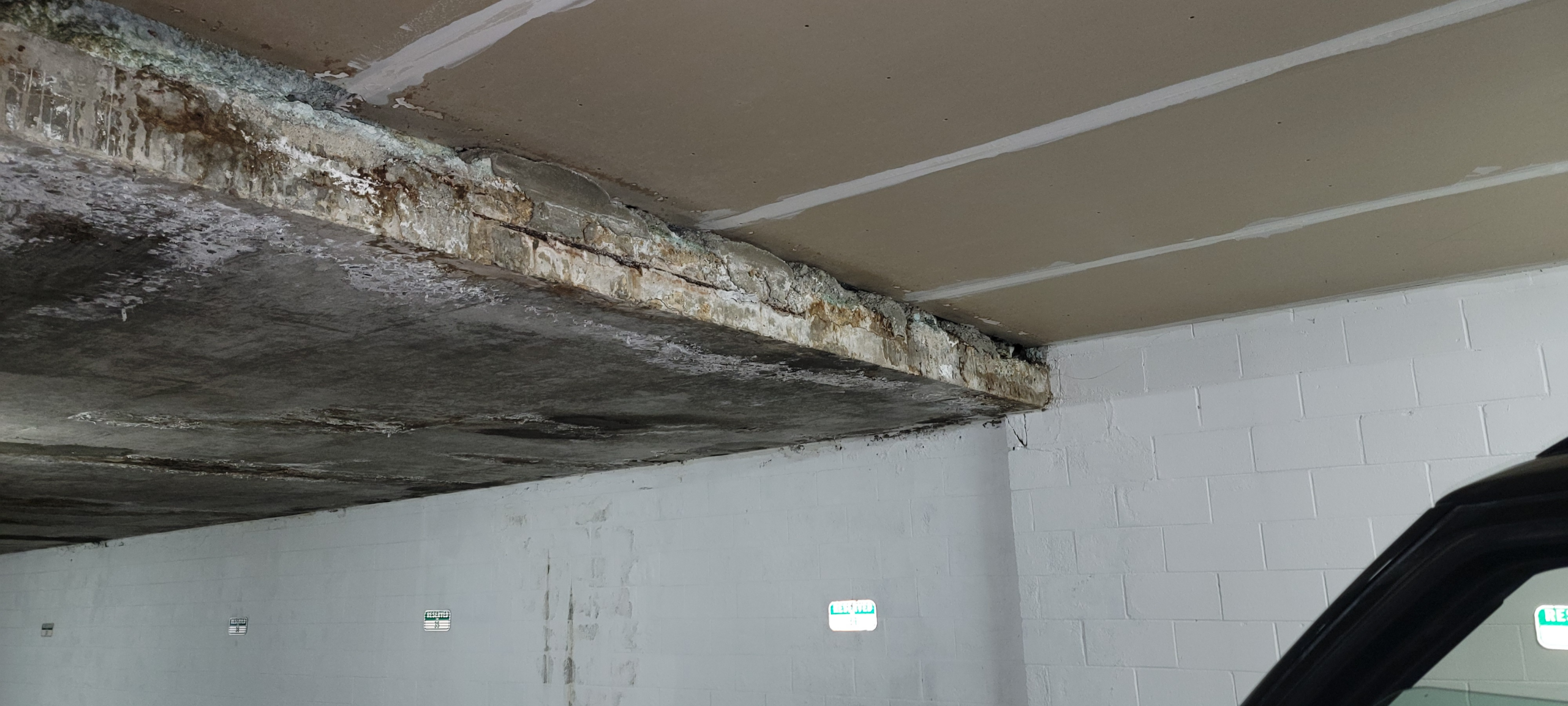
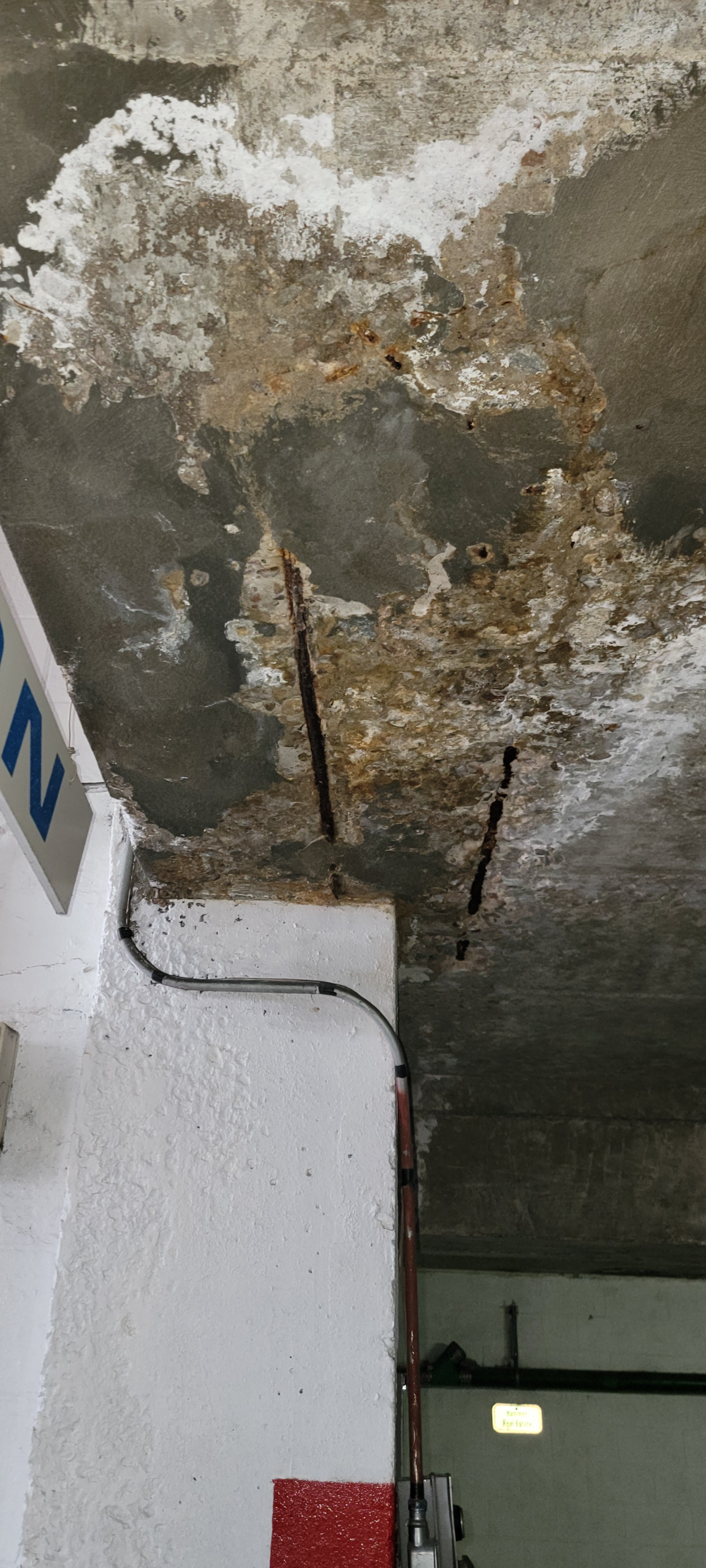
When it comes to small continuous water leaks, deferred plumbing or drainage maintenance is asking for problems that will quickly evaporate any short-term cost savings. At Helfrich Associates, we were retained by a building owner based on our decades of experience to evaluate an underground parking garage experiencing ceiling leaks, exposed reinforcing steel in the concrete beams and deteriorating concrete.
The Problems
Above the garage there is an asphalt parking lot in the center of the structure, with a two-story office building located around the perimeter. The client requested an evaluation to determine whether the garage posed a safety concern and whether the deterioration was affecting the structural performance of the office building.
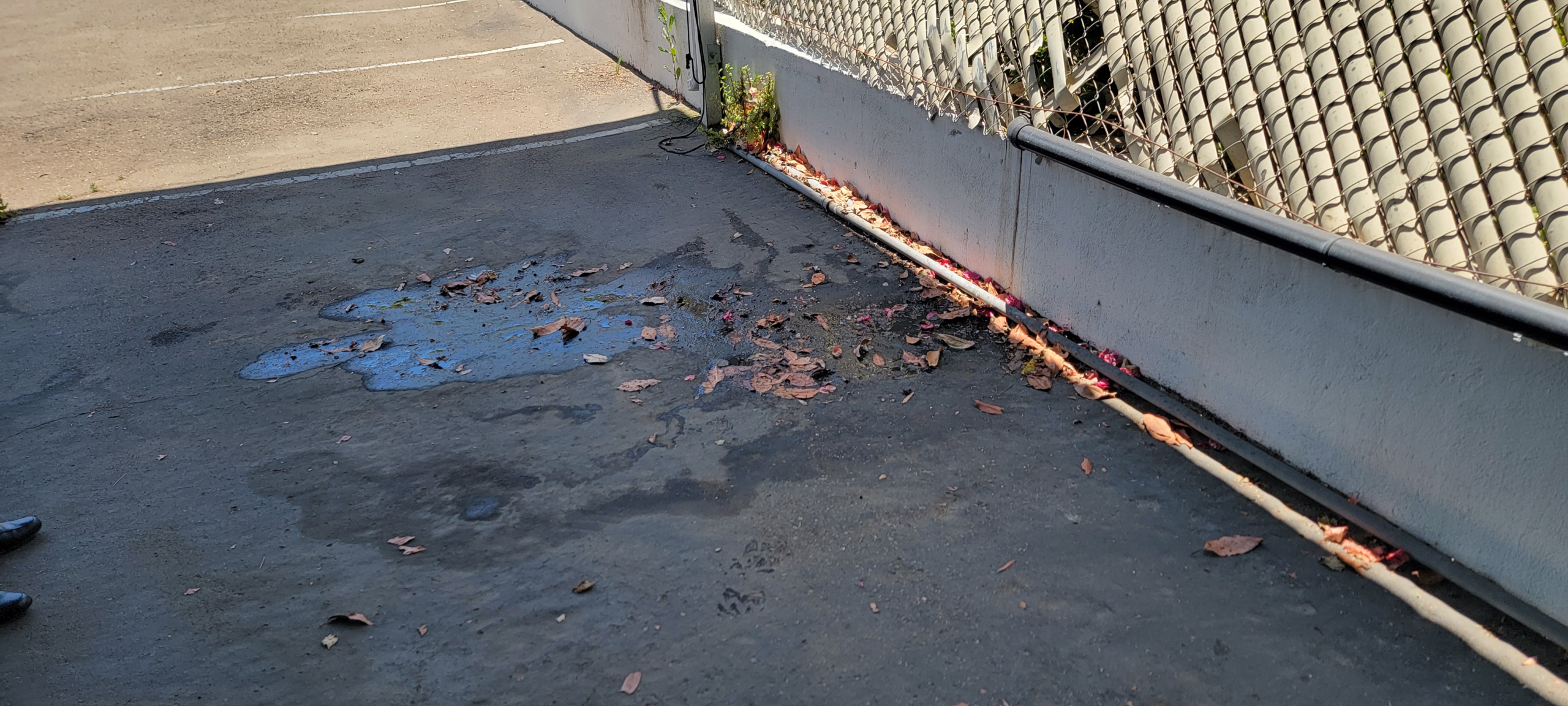
It was apparent that the subterranean parking garage has likely been exposed to water intrusion for many years. Prolonged moisture exposure has resulted in significant corrosion of the reinforcing steel and spalling of the concrete. Potential past sources of water intrusion include rainwater infiltration through joints in the asphalt paving. At the time of our inspection, the only visible active source of water intrusion was near the southwest portion of the asphalt parking area.
The Process
- Initial Site Visit: We documented visible damage and evidence of water intrusion and prepared a preliminary report outlining the recommended scope of the investigation.
- Floor Elevation Survey: A floor level survey of the first floor of the office building was performed to evaluate potential movement or settlement.
- Non-Destructive Testing: Testing of the garage ceiling was conducted to locate reinforcing steel within the concrete slab and beams.
- Concrete Coring: Cores were taken through the pavement and concrete to determine asphalt and concrete thickness as well as overall concrete condition.
- Laboratory Testing: Concrete samples were tested to evaluate compressive strength and chemical composition.
The Solution
Repair Plan Development: Following completion of the investigation and laboratory testing, repair recommendations were prepared and presented to the client who then requested a comprehensive repair plan so that a specialty construction repair firm could complete the work.
Conclusions
Our investigation had indicated that the office building above the garage is not currently experiencing significant structural movement related to the garage deterioration. The primary source of water intrusion appears to be the asphalt parking area above the garage, with the area directly beneath the asphalt showing the greatest degree of deterioration.
Based on our findings, we recommend the following repairs:
- Install temporary shoring beneath damaged portions of the concrete slab to maintain safety during repairs.
- Demolish deteriorated concrete in the affected slab and beams.
- Apply epoxy grout to repair damaged concrete areas.
- Strengthen and repair the slab and beams using carbon fiber reinforcement, followed by the application of a protective coating system.
At Helfrich Associates, we are frequently called by clients to investigate these issues. The earlier we are called in to help, then investigate and resolve these problems, the lower the cost of repair for the building owner.