
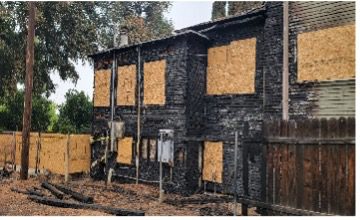
The slow process of rebuilding after the Malibu and Altadena fires that hit Southern California in early 2025 is still much in the news. The slow pace is the result of many complex regulatory issues. They include state and city government leaders attempts to implement new sustainable insurance guidelines, updated building codes, as well as home landscape, city property and wilderness fire safety regulations–all with the purpose of enhancing safety and protecting the environment in a drought prone region.
At Helfrich Associates, we are engineers licensed in California and other western states to help homeowners and business owners build back better, stronger and safer. Our team of experts is currently working on multiple fire rebuild projects in Southern California with homeowners, insurance companies, developers and business owners. Our 40+ years of local experience sadly means that we’ve done all this before to help other clients and know how streamline the process.
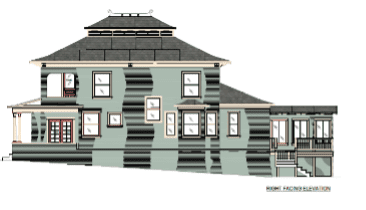 Fire rebuilds are always devastating on their own, but when they occur within a historic district, the process becomes significantly more complex due to added regulations and preservation requirements. One project involved a single-family home built in the early 1900s and located in a historic part of town. The fire damaged the rear portion of the home, impacting the structure from the foundation up through the roof. This home was constructed before modern building codes and fire safety regulations.
Process
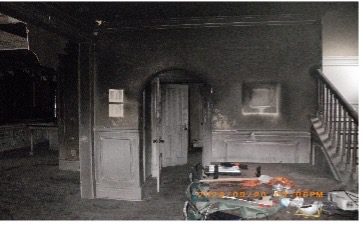
The project began with an initial site visit to assess the extent of the fire damage and determine which portions of the structure required demolition. Due to the historic nature of the home, demolition was limited in scope and consisted of carefully removing only the fire-damaged elements rather than demolishing the structure in its entirety. A targeted demolition plan was prepared and submitted by the contractor to local City staff for approval. Once approved, this selective demolition was completed.
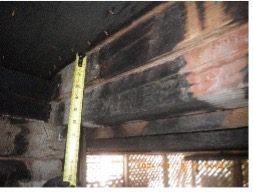
Following demolition, a comprehensive evaluation of the remaining structure was performed. A full repair plan was then developed, including both structural and Mechanical Electrical Plumbing (MEP) components. Throughout this phase, close coordination was maintained with the City’s Planning Department and the Historical Society. Working together from the start helped ensure that the necessary final inspections would go smoothly without last minute surprises from anyone.
Based on the scope of the proposed repairs, the Historic Society determined the level of review required. This project qualified for a minor historic review, which required the preparation of color-coded elevations and a materials board demonstrating that exterior elements—including the roof, siding, and trim—would be replaced with like-for-like materials. Planning approval could not be issued until Historic approval was granted. This took some time and patience, but the rebuild of this grand home is worth it.
Conclusion
This project highlights the added complexity of fire rebuilds in historic districts and the importance of careful documentation, coordination, and precision during demolition and repair. By limiting demolition to only fire-damaged components and working closely with planning and historic agencies, the project was able to move forward while pres